
Electric vs Diesel Scissor Lifts: Pros, Cons & Best Uses
The problem: choosing the wrong power type causes delays
Scissor lifts might look similar on paper, but choosing between electric vs diesel scissor lifts can have a major impact on productivity, safety, and cost.
Select the wrong type and you could face restricted access, unnecessary emissions issues, or poor performance on site. Get it right, and your team works faster with fewer interruptions.
That’s why Baker Plant Hire regularly advises site managers across Sleaford, Lincoln, the East Midlands, and the wider Midlands on which scissor lift power type best suits their site — before equipment is booked or delivered.
This guide breaks down the pros, cons, and best uses of electric and diesel scissor lifts in plain terms.
What’s the difference between electric and diesel scissor lifts?
The key difference is how and where they’re designed to work.
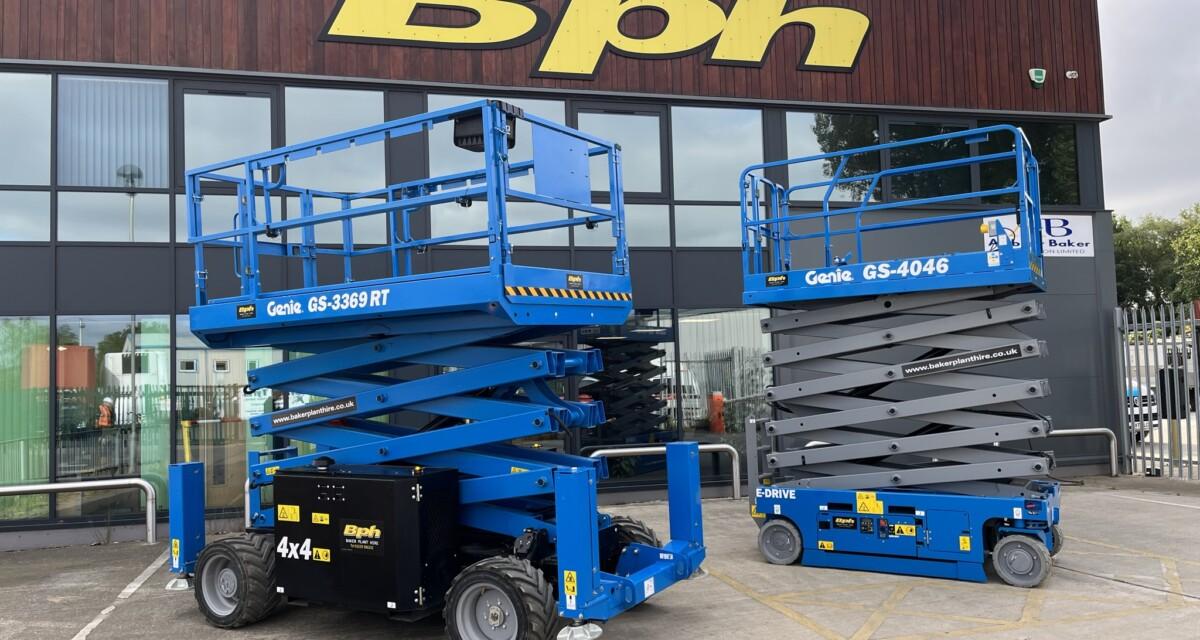
- Electric scissor lifts are built for indoor, slab-based environments
- Diesel scissor lifts are designed for outdoor use and rough terrain
Both provide safe vertical access, but their capabilities differ significantly depending on environment, surface, and required height.
Electric scissor lifts: pros, cons & best uses
Pros of electric scissor lifts
Electric scissor lifts are the preferred choice for indoor and sensitive environments.
Key advantages:
- Emission-free operation
- Low noise levels
- Compact footprint for tight access
- Suitable for smooth, level floors
These features make electric models ideal for warehouses, factories, retail units, and sites where cleanliness and noise control matter — including food production and MOD/RAF facilities.
Cons of electric scissor lifts
Electric scissor lifts are not designed for every scenario.
Limitations include:
- Reduced performance on uneven ground
- Lower suitability for outdoor use
- Limited traction compared to diesel machines
They perform best on slab floors and should not be relied on for rough terrain or exposed sites.
Best uses for electric scissor lifts
Electric scissor lifts are typically used for:
- Warehouse racking and stock work
- Ceiling installation and lighting
- M&E and fit-out projects
- Indoor maintenance and inspections
“Electric or diesel scissor lift for warehouse work?” Electric is almost always the correct choice.
Diesel scissor lifts: pros, cons & best uses
Pros of diesel scissor lifts
Diesel scissor lifts are built for demanding environments.
Key advantages:
- Higher working heights
- Increased load capacity
- Strong traction on rough terrain
- Designed for outdoor conditions
These machines are commonly used on construction sites where ground conditions are variable and stability is critical.
Cons of diesel scissor lifts
Diesel scissor lifts are powerful but less versatile indoors.
Considerations include:
- Emissions make them unsuitable for enclosed spaces
- Larger footprint
- Higher noise levels
For indoor environments, diesel units are rarely appropriate.
👉 See scissor lift options here
Best uses for diesel scissor lifts
Diesel scissor lifts are best suited for:
- Outdoor construction sites
- Structural and steelwork installation
- Cladding and façade projects
- Rough-terrain access
If you’re deciding when to use a diesel scissor lift, the answer is usually when outdoor performance and height are the priority.
Electric vs diesel scissor lifts: quick comparison
| Feature | Electric Scissor Lifts | Diesel Scissor Lifts |
|---|---|---|
| Best environment | Indoor | Outdoor |
| Emissions | Emission-free | Diesel emissions |
| Noise levels | Low noise | Higher noise |
| Terrain suitability | Smooth, level slab floors | Rough and uneven ground |
| Typical working height | Low to mid-range | Mid to high-range |
| Manoeuvrability | Compact and narrow | Larger footprint |
| Common uses | Warehouses, maintenance, fit-outs | Construction, cladding, external works |
Which scissor lift should you use for your site?
When choosing between electric and diesel scissor lift options, focus on three factors:
- Environment: Indoor = electric. Outdoor = diesel.
- Ground conditions: Slab floors favour electric models. Uneven terrain requires diesel.
- Height and load requirements: Higher reach and heavier loads often point to diesel machines.
If you’re unsure, it’s better to specify site conditions early rather than change equipment later.
Why Baker Plant Hire makes the decision easier
Baker Plant Hire operates as a true one-stop shop for access and plant equipment.
That means:
- Electric and diesel scissor lifts from one supplier
- Operator training available
- Fully maintained, LOLER-compliant equipment
- One point of contact for multiple machines
👉 Browse Plant and Equipment Hire here
The delivery advantage
Many national hire firms charge £250–£300 per machine, per delivery.
Baker Plant Hire uses its own fleet of lorries instead:
- One delivery charge for multi-machine deliveries
- Faster turnaround
- Lower logistics costs across Lincolnshire, the East Midlands, and the Midlands — with scheduled delivery available nationwide
Need help choosing between electric and diesel?
If you want advice on whether an electric or diesel scissor lift is right for your site — or need availability checked — contact the Baker Plant Hire team in Sleaford today.
Clear guidance. Practical solutions. No guesswork.
BPH | Baker Plant Hire is a registered company in England.
© BPH | Baker Plant Hire 2026. All Rights Reserved