
How One Plant Hire Supplier Can Cut Delivery Delays on Busy Sites
There’s a version of this scenario that most site managers have lived through at least once.
You’ve got a scissor lift arriving Tuesday from one company, a telehandler coming Thursday from another, and you’re waiting on a call back from a third about the digger. Three different drivers, three different delivery windows, three different invoices — and somehow the scissor lift arrives before the slab is ready and the telehandler turns up a day late.
It doesn’t have to work like this. Here’s why consolidating to a single plant hire supplier is one of the simplest ways to run a tighter, less stressful site.
The Real Cost of Using Multiple Suppliers
The obvious cost is delivery. Every supplier charges separately for their wagon, their driver, their fuel. If you’re hiring three types of kit from three different companies, you’re paying three delivery charges — even if all three machines are going to the same postcode.
But the hidden costs are what really add up:
Coordination time. Every additional supplier is another phone call, another confirmation email, another number to chase when something doesn’t show up on time. On a busy site, that time adds up fast — and it usually falls to the site manager who already has enough on their plate.
Mismatched delivery windows. Supplier A delivers at 7am. Supplier B can only do afternoon. Supplier C needs 48 hours notice for any changes. Now your site is working around logistics rather than logistics working around your site.
Fragmented accountability. When something goes wrong — a machine arrives damaged, a delivery gets delayed, a swap is needed — with multiple suppliers you spend time working out whose problem it is before anyone actually fixes it. With one supplier, there’s one call and one person responsible for sorting it.
Admin overhead. Multiple suppliers means multiple hire agreements, multiple invoices, multiple payment runs. For a main contractor managing several projects simultaneously, that’s a meaningful chunk of time and resource spent on paperwork rather than delivery.
What Consolidated Hire Actually Looks Like in Practice
When everything comes from one place, the logistics change completely.
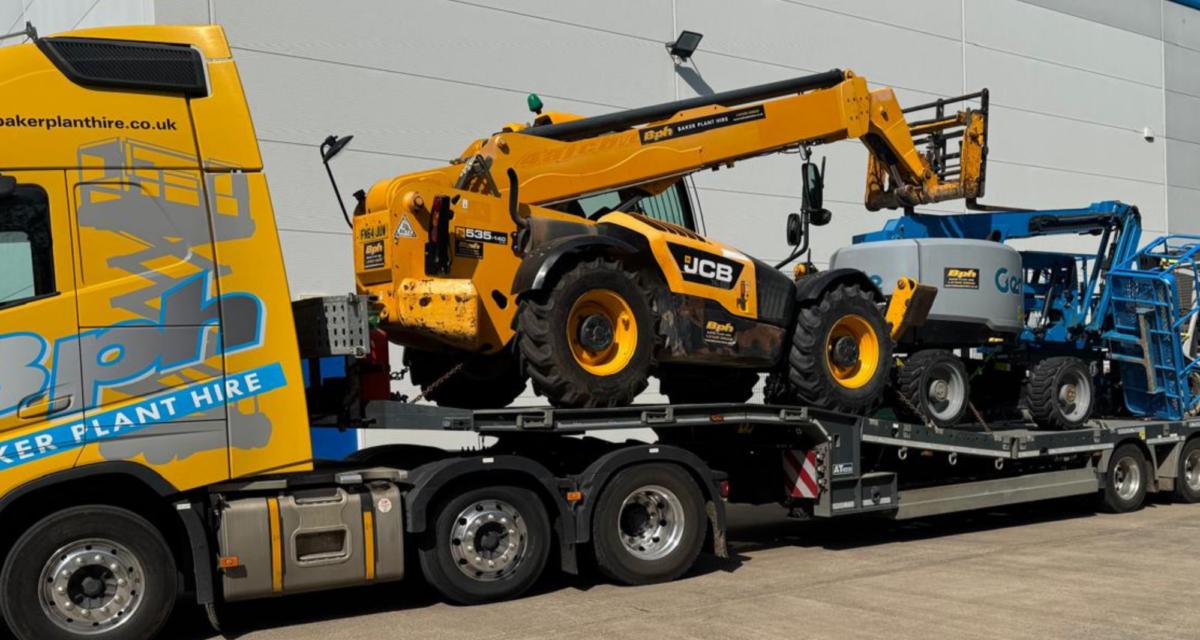
Multiple machines go on one vehicle. One driver. One delivery window. One call to confirm it’s on the way. If the site is ready early or the programme slips, there’s one number to ring to bring it forward or push it back.
At Baker Plant Hire, this is how most of our customers work with us — not because we’ve pushed them into it, but because once you’ve experienced a single consolidated delivery versus the alternative, it’s hard to go back.
One supplier, one delivery, one invoice — that’s the straightforward version. But in practice it also means one relationship, one point of contact who knows your project, and one team that can advise across the whole kit list rather than just their slice of it.
The Equipment That Typically Gets Bundled Together
The combinations vary by project type, but some come up again and again:
Commercial fit-outs and M&E installations: Electric scissor lifts for ceiling work, alongside a telehandler for materials handling. Possibly a boom lift for external access or high-level internal work. All going to the same site, often on the same start date.
Construction groundworks: Diggers and dumpers as the core, with a roller for compaction and site lighting for early starts or winter working. Again — same site, same programme, no reason for multiple deliveries.
Cladding and roofing projects: Boom lifts or cherry pickers for the external face, scissor lifts for internal access or material positioning, and increasingly vacuum panel lifters for handling composite cladding panels safely without manual handling risk.
Industrial maintenance shutdowns: These often require the widest mix — scissor lifts at multiple heights, a telehandler for parts and components, site equipment for support tasks. Getting everything confirmed and delivered before the shutdown window starts is critical. One supplier makes that coordination significantly easier.
“But What If One Supplier Doesn’t Have Everything?”
It’s a fair question. The reason many contractors end up using multiple suppliers isn’t preference — it’s because their usual company doesn’t carry the full range, so they patch the gaps elsewhere.
Baker Plant Hire’s fleet covers plant, powered access, site equipment and specialist lifting gear. Diggers, dumpers, rollers, scissor lifts, boom lifts, telehandlers (including 360° Roto-Telehandlers), forklifts, lighting towers, vacuum panel lifters, site accommodation — the range is broad enough that the vast majority of projects can be fully equipped from a single booking.
If there’s something unusual or specialist that we don’t carry in-house, we’ll tell you straight and help you source it — but that’s the exception, not the rule.
Delivery: What to Expect
Based in Sleaford, Lincolnshire, we offer same- and next-day delivery across the East Midlands, including Grantham, Boston, Peterborough, and surrounding RAF bases. For planned projects further afield, we coordinate UK-wide delivery around your programme — so wherever your site is, the logistics are manageable.
The consolidated delivery model works particularly well for East Midlands projects where we can turn around same-day if something changes. For national contracts, the planning lead time means we can usually get everything loaded and scheduled in a single run regardless of the machine mix.
One thing worth knowing: if your project spans multiple phases and the kit list changes between them, you’re still dealing with one company throughout. Swaps, additions, extensions — all handled with a single call to the same hire desk that knows your project already.
A Word on Admin
It’s not glamorous, but it matters. Every hire company you use generates its own paperwork — hire agreements, delivery notes, LOLER certificates, invoices. On a big project with multiple suppliers across multiple phases, that’s a meaningful volume of documents to track, file, and reconcile against your cost plan.
Consolidating to one supplier doesn’t eliminate the paperwork, but it does cut it substantially. One set of hire agreements. One set of LOLER certificates. One invoice per period. For anyone managing project costs against a budget, that clarity has real value.
Frequently Asked Questions
Does it actually save money to use one supplier? Usually, yes — primarily on delivery. Instead of paying separate delivery charges to multiple companies, you pay one consolidated charge to cover everything on the same vehicle. The saving depends on the kit list and distances involved, but it’s rarely insignificant.
What if I need machines at different times during a project? That’s completely normal. We work around phased programmes all the time — initial plant for groundworks, powered access when the structure is up, site equipment throughout. We schedule deliveries and collections around your programme, not ours.
Can you do same-day delivery if something breaks down or a machine needs swapping? Across Lincolnshire and the East Midlands, same-day is usually possible. For sites further afield it depends on what we’ve got available and where the machine needs to go — but we’ll always tell you straight what we can do and how quickly.
Do I have to be a regular customer to get consolidated delivery? No. Whether it’s your first booking or your fiftieth, the approach is the same. Call us with your kit list and your dates and we’ll work out the most efficient way to get everything to site.
What areas do you cover? Our central location in Sleaford means we can offer fast, reliable delivery to nearby towns and RAF bases, while our wider logistics network allows us to coordinate plant and equipment hire anywhere in the country.
Ready to Simplify Your Next Project?
Tell us what you need, when you need it, and where it’s going. We’ll confirm availability, sort the logistics, and get it all to site on one vehicle.
Call 01529 306 232 — our hire desk can usually give you availability and a delivery estimate on the same call.
Or get in touch via the enquiry form at bakerplanthire.co.uk
Browse the fleet:
BPH | Baker Plant Hire is a registered company in England.
© BPH | Baker Plant Hire 2026. All Rights Reserved